

Tycho.AI Validates Halley VTOL UAS with Successful C-UAS and One-Way Attack Demonstrations at T-REX 26-2
Cambridge, MA, May 26, 2026 (GLOBE NEWSWIRE) -- Earlier this month, Tycho.AI successfully validated its high-speed Halley Group 1 vertical take-off and landing (VTOL) uncrewed aerial system (UAS) during testing at the Office of the Under Secretary of War for Research and Engineering’s (OUSW R&E) Technology Readiness Experimentation (T-REX) 26-2 event at Camp Atterbury, IN. The demonstrations showcased both Halley’s flight dynamics and its C-UAS and one-way attack capabilities.
Throughout the exercise, Tycho.AI executed 39 evaluated test flights using Halley in its first-person view (FPV) configuration. The platform reached a maximum speed of 165 mph, operated at altitudes between 9 and 10,000 feet, and completed a maximum flight distance of 35 kilometers.
Tycho.AI put Halley through a series of rigorous mission profiles designed to test the limits of the newly designed, low-cost platform in an operationally representative environment. The team conducted an inert strike against a ground target and an aerial interception of a Shahed replica, demonstrating the vehicle's superior speed and maneuverability against airborne threats.
"Halley's performance validates that our vision for a small, fast, agile tactical UAS is not just theoretical; it is ready for the battlefield," said Sertac Karaman, Founder of Tycho.AI. "T-REX provided the perfect venue to demonstrate Halley's versatility across multiple mission sets and its direct effectiveness against modern adversarial threats."
In addition to flight testing at T-REX 26-2, the platform passed a comprehensive cyber evaluation, demonstrating Halley’s advanced resilience and security in operational use. The event also highlighted the platform’s Automatic Target Recognition (ATR) capabilities and innovative video stream tokenization.
In communication-degraded environments with significant bandwidth constraints, streaming video often fails. To maintain visual flight data, Tycho.AI successfully compressed and transmitted navigation-quality video over a low-bandwidth data link via Halley’s onboard AI system. Its advanced encryption adds an additional layer of security, protecting data during transmission with a feed that is uninterpretable by any other system if intercepted.
Following these successful field exercises, Halley has achieved Technology Readiness Level (TRL) 6. The team is now focused on validating its autonomous flight, integrating a kinetic payload, and expediting Halley's transition to full-scale production to address urgent national security and joint force requirements.
###
About Tycho.AI:
Tycho.AI builds mission-critical autonomy software and mission-optimized compute hardware for unmanned systems in GPS-denied and comms-contested environments. The company’s edge-executable AI enables intelligent navigation and operation without remote control or persistent connectivity, allowing for fully autonomous high-speed and low-altitude operations. Steered by national security experts and MIT-educated engineers, Tycho.AI is reshaping the future of battlefield autonomy. Visit tycho.ai for more information.
Contact Info
Ashley Young
ashley.young@tycho.ai
+1 256-345-9394
Attachment


Halley Soars at T-REX 26-2
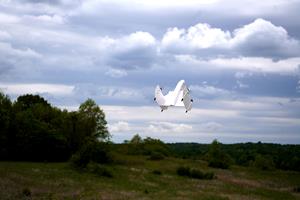
Tycho.AI’s Halley Group 1 VTOL flies during T-REX 26-2 demonstration held at Camp Atterbury, IN, May 4-15. [Credit: Tycho.AI]
Legal Disclaimer:
EIN Presswire provides this news content "as is" without warranty of any kind. We do not accept any responsibility or liability for the accuracy, content, images, videos, licenses, completeness, legality, or reliability of the information contained in this article. If you have any complaints or copyright issues related to this article, kindly contact the author above.
